
Why Are My Restaurant Kitchen Floors Still Greasy and Slippery After Mopping? (The 4-Step Pro Fix)
Why Are My Restaurant Kitchen Floors Still Greasy and Slippery After Mopping? (The 4-Step Pro Fix)
It’s 1 AM. The last ticket is out, the line is clean, and your closing manager is exhausted. All that’s left is to mop the kitchen floor. They grab the mop, fill the bucket with piping hot water and “floor cleaner,” and get to work.
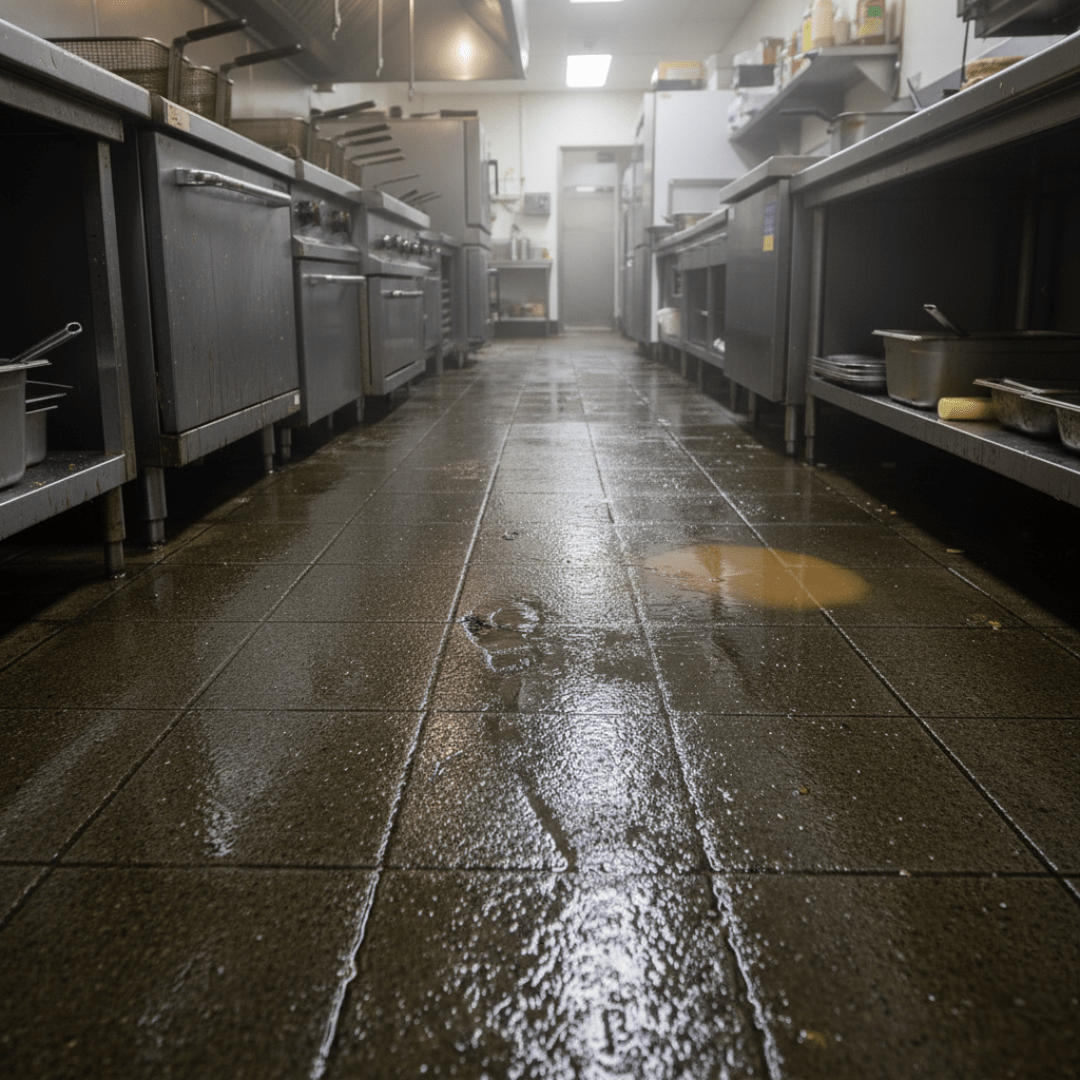
When they’re done, the floor is… still tacky. It’s got a dull, greasy sheen, and it’s dangerously slippery.
This is one of the most common, frustrating, and dangerous problems in the restaurant industry. A slippery kitchen floor is the #1 cause of employee slip-and-fall injuries, a massive liability that can cost you thousands in worker’s comp claims and lost time.
You’re mopping every single night. Why isn’t it working?
Here’s the hard truth: You’re not cleaning the floor. You’re seasoning it.
Just like a cast-iron skillet, your nightly “cleaning” routine is likely just spreading a thin, new layer of grease, which then hardens, builds up, and becomes a permanent, hazardous part of your floor.
The problem isn’t your staff’s effort; it’s their chemical. This is a chemistry problem, and you’re bringing the wrong weapon to the fight. We’re going to diagnose exactly why your floors are still greasy and give you the professional 4-step plan to fix them for good.
Part 1: The “Why” – Diagnosing Your Greasy Floor Problem
To beat the enemy, you have to understand it. Your enemy isn’t “dirt”—it’s polymerized grease.
The Enemy: Aerosolized, Polymerized Fat
- The “Why”: All day long, your fryers, flattop, and sauté station are aerosolizing microscopic fat particles into the air. This fine, oily mist settles everywhere—on your walls, your hoods, and especially your floor.
- The Problem: This isn’t just “oil.” As it settles, it mixes with dust, flour, and other debris. The heat from the kitchen then “polymerizes” it, curing it into a tough, sticky, glue-like film. This is the “seasoning” you’re fighting.
Failure #1: You’re Using the Wrong Chemical
This is the single biggest mistake. Your manager is probably grabbing the “floor cleaner” from the supply closet. This is almost certainly a neutral floor cleaner.
- What It Is: A neutral cleaner (pH of 7) is designed for one job: to gently clean floors that are sealed with a floor finish (like the VCT in your dining room).
- Why It Fails: It has zero power to fight grease. It’s not designed to. It has no chemical ability to break down polymerized fat.
- The Result: You’re essentially mopping your greasy kitchen floor with water. You’re just pushing the grease around, streaking it into an even, perilous film.
Failure #2: Your Mop is a “Grease Paintbrush”
Let’s look at your mop head. Is it a dingy, grey, heavy, matted-down string mop? If so, that mop head is “seasoned.” It’s saturated with old grease.
- The Problem: When you put that mop into your bucket, you’re not cleaning the mop; you’re just adding a little water to the grease it’s already holding.
- The Result: You are literally painting your floor with a thin layer of diluted grease. The hot water might feel like it’s working, but it just melts the grease long enough to be spread. As it cools, it hardens, leaving your floor tackier and more dangerous than when you started.
Failure #3: You’re “Cleaning,” Not “Deep Scrubbing”
A mop, by design, just glides over the surface. That polymerized grease, however, has formed a hard, “caked-on” layer, especially in the low-traffic areas and grout lines. A mop can’t break this up.
- The Problem: You need agitation (friction) to break the mechanical bond of that old grease.
- The Result: Your high-traffic walkways might look okay, but the built-up grease layer is spreading, making the entire floor a uniform, slippery mess.
Part 2: The “How” – The 4-Step Fix for a “Squeaky Clean” Floor
You can solve this problem this week. You just need to change your process and your cleaning chemicals. This is the professional foodservice method.
Step 1: Get the Right Weapon (A True Degreaser)
Stop using neutral cleaner in the kitchen immediately. Relegate it to the dining room, where it belongs.
- The Fix: You must purchase a heavy-duty floor degreaser from our cleaning chemicals category.
- The Science: A degreaser is a powerful, high-alkaline (pH of 11-14) chemical. It doesn’t just “lift” grease; it chemically attacks it through a process called saponification. It breaks down the insoluble fat molecules and turns them into a water-soluble, soap-like substance.
- The Result: The grease that was “glued” to your floor can now be suspended in water and rinsed away completely.
Step 2: Get the Right Tools (Agitation is King)
Throw away that disgusting, greasy mop head. It’s un-savable. Start fresh.
- The Fix: You need tools that scrub.
- For Daily Cleaning: Use a deck brush. A stiff-bristled brush will provide the daily agitation needed to break up fresh grease and stop it from polymerizing.
- For a Weekly “Reset”: This is the game-changer. Use a low-speed (175 RPM) floor buffer with an aggressive floor pad. A green or blue scrub pad is perfect. This machine will do more in 10 minutes than your staff can do in 2 hours by hand. It will mechanically strip all that caked-on, old grease and bring your floor back to its original, non-slip surface.
Step 3: Master the Process (Dwell Time is Your Friend)
This is the “secret” that separates the pros from the amateurs. You cannot just “mop and go.” The chemical needs time to work.
- The Fix: Implement a “Dwell Time” policy.
- The New Process:
-
- Sweep the floor of all large debris.
-
- Apply the properly-diluted floor degreaser solution liberally to the entire floor using a clean mop or a deck brush.
-
- LET IT DWELL. This is the most important step. Walk away for 10-15 minutes. Go clean the hoods or the line. During this time, the degreaser is waging a chemical war, saponifying the grease and breaking it down.
-
- Agitate. After 10-15 minutes, come back and scrub the floor. Use your deck brush (daily) or your floor machine with a green scrub pad (weekly). You’ll see the grease and grime lift up into a slurry.
Step 4: The Critical Rinse (The Step Everyone Skips)
You’ve just successfully lifted all the grease and chemical residue into a slurry. Your job isn’t done. If you let that dry, it will be a sticky, soapy, hazardous mess.
- The Fix: You must rinse.
- The Process:
-
- Remove: Use a squeegee to pull all the dirty slurry to a floor drain.
-
- Rinse: Get a new, clean bucket filled with plain, cool water. Mop the entire floor again.
-
- Rinse Again (Optional but Recommended): A “two-rinse” process is best. This ensures all the chemical residue and suspended grease is removed.
-
- The Result: A truly clean, non-slip, “squeaky” floor. The floor is now safe for your staff and ready for the next day.
Your New 2-Part Kitchen Floor Program
You can’t let it get bad again. Here is your new, permanent program.
Your Daily “Shut Down” (15-20 Minutes)
- Sweep all debris.
- Apply heavy-duty floor degreaser with a deck brush.
- Dwell for 10 minutes (while you clean other items).
- Scrub with the deck brush.
- Rinse with a clean mop and cool water.
Your Weekly “Deep Clean” (30-45 Minutes)
- Sweep all debris.
- Apply heavy-duty floor degreaser with a mop.
- Dwell for 15 minutes.
- Scrub with a floor machine and a green or blue floor pad. Pay special attention to grout lines and the areas under your fryers and line.
- Squeegee the slurry to the drain.
- Rinse twice with a clean mop and cool water.
A greasy, slippery kitchen floor is not “just part of the job.” It’s a sign of a failed process and the wrong bulk cleaning chemicals.
By switching to a powerful heavy-duty floor degreaser and swapping your “grease paintbrush” mop for tools of agitation (like floor pads and deck brushes), you can solve this problem for good. This isn’t just about passing a health inspection—it’s about protecting your employees and your business from the #1 most preventable accident in the industry.
Ready to get a grip on your floors? Stop buying “cleaners” and start buying solutions. Shop our full line of professional cleaning chemicals and floor pads designed for the tough demands of a restaurant kitchen.