Sanitizer vs. Disinfectant: What’s the Difference and What Does Your Facility Need?
Sanitizer vs. Disinfectant: What’s the Difference and What Does Your Facility Need?
In the world of bulk cleaning supplies, no two words are used more interchangeably—and more incorrectly—than “sanitizer” and “disinfectant.”
To most people, they mean the same thing: “kill germs.”
This simple mistake is, without question, the most dangerous and expensive error a business can make.
Using a sanitizer on a restroom floor is a massive health risk. Using a disinfectant on a food-prep counter is also a massive health risk (and a compliance violation). And using either one incorrectly—which 90% of people do—means you’re wasting time, labor, and product to achieve a false sense of security.
These two products are not the same. They are legally distinct, chemically different, and designed for completely separate jobs. If Sanitizer is a tool to reduce a specific threat, Disinfectant is a tool to eliminate a broad spectrum of enemies.
This is your expert guide. We’re going to clear up the confusion for good. We’ll explain the difference, the “where” and “why” of each, and how to use them correctly so your facility is actually clean, safe, and compliant.
The Core Difference: “Reduce” vs. “Kill”
The U.S. Environmental Protection Agency (EPA) regulates both products, and they have very clear, legal definitions. It all comes down to the “kill claim.”
What is a Sanitizer?
- The Job: To reduce the number of bacteria on a surface to a safe level (as judged by public health standards).
- The Kill Claim: A sanitizer must kill 99.9% of specified bacteria in 30 seconds.
- The Fine Print: Notice the word: bacteria. A standard sanitizer makes no claims to kill viruses or fungi.
- The Analogy: A sanitizer’s job is to knock down the bacterial population to a “safe” level.
- Primary Use: Food-contact surfaces (kitchens) and hands (bulk hand sanitizer).
What is a Disinfectant?
- The Job: To kill or eliminate virtually all pathogenic microorganisms (germs) on a surface.
- The Kill Claim: A disinfectant must kill 99.999% of all germs specifically listed on its label.
- The Fine Print: This is the key. The label is a list of the product’s “battle-tested” victims, which often includes tough-to-kill bacteria (like Staph, E. coli), viruses (like Influenza, Norovirus, SARS-CoV-2), and fungi (like mold, mildew).
- The Analogy: A disinfectant is a broad-spectrum weapon designed to eliminate a wide array of specific, dangerous pathogens.
- Primary Use: High-touch, non-food surfaces (restrooms, doorknobs, desks, hospital rooms).
The Bottom Line: You sanitize a cutting board to make it safe for food. You disinfect a toilet to kill the viruses. Using the wrong product for the job is, at best, a waste of money and, at worst, a serious safety hazard.
Part 1: The Deep Dive on SANITIZERS
There are two types of sanitizers you’ll buy, and they are not the same.
1. Food-Contact Sanitizers (Regulated by EPA)
This is the product you should be using in your kitchen and any food-prep areas.
- When to Use It: ONLY on food-contact surfaces.
-
- Cutting boards & prep tables
-
- Deli slicers & knives
-
- Utensils & dishes
-
- Bar tops & restaurant tables
- Why Not a Disinfectant? A disinfectant leaves behind a strong chemical residue that is not safe for human consumption. It is a compliance violation to use one on a food-prep surface without a separate, potable-water rinse step.
- How to Use It Correctly (The 2-Step Process):
-
- CLEAN FIRST: You cannot sanitize a dirty surface. The sanitizer will be “used up” by the grease and food debris. You must clean the surface first with a soap or degreaser.
-
- SPRAY & AIR DRY: After cleaning and rinsing, apply the food-safe sanitizer and let it air dry. These are “no-rinse” products. The sanitizer does its job of killing 99.9% of bacteria as it evaporates.
2. Hand Sanitizers (Regulated by FDA)
This is the product you put in dispensers for people to use on their skin.
- When to Use It: ONLY on hands.
-
- Why It’s Different: Because it’s designed for skin, it’s regulated by the FDA (Food & Drug Administration) as an over-the-counter drug. It uses skin-safe active ingredients, most commonly 60-95% alcohol.
- How to Use It Correctly:
-
- It is not a replacement for hand washing. Hand washing with bulk hand soap and water is always superior, as it physically removes grime and germs.
-
- Bulk hand sanitizer is a fantastic tool for in-between washings or when a sink isn’t available.
Part 2: The Deep Dive on DISINFECTANTS
This is your heavy-hitter, the tool you need to protect your staff and customers from the most common, dangerous germs. This is the product that should make up the bulk of your bulk cleaning chemicals order.
- When to Use It: On all high-touch, non-food surfaces.
- Restrooms: Toilets, flushers, stall doors, sinks, faucets, and baby changing stations.
- Offices: Doorknobs, light switches, elevator buttons, conference tables, keyboards, phones.
- Facilities: Gym equipment, patient bedrails, school desks, handrails.
- Why Not a Sanitizer? A sanitizer will not kill the most dangerous germs in these areas, like Norovirus (the “stomach flu”), Influenza, or mold. Using a sanitizer on a toilet is like trying to stop a charging bull with a fly-swatter. You’re leaving the real threat behind.
The Single Most Important Concept: “DWELL TIME”
If you learn only one thing from this article, let it be this.
Dwell Time is the amount of time a surface must remain visibly wet with the disinfectant to achieve its 99.999% kill claim.
Almost everyone gets this wrong. They spray a disinfectant and immediately wipe it dry.
If you spray and wipe, you have not disinfected anything. You’ve just cleaned it. You’ve wasted your time, your labor, and your money.
The disinfectant needs time to work. That time is printed directly on the product’s label.
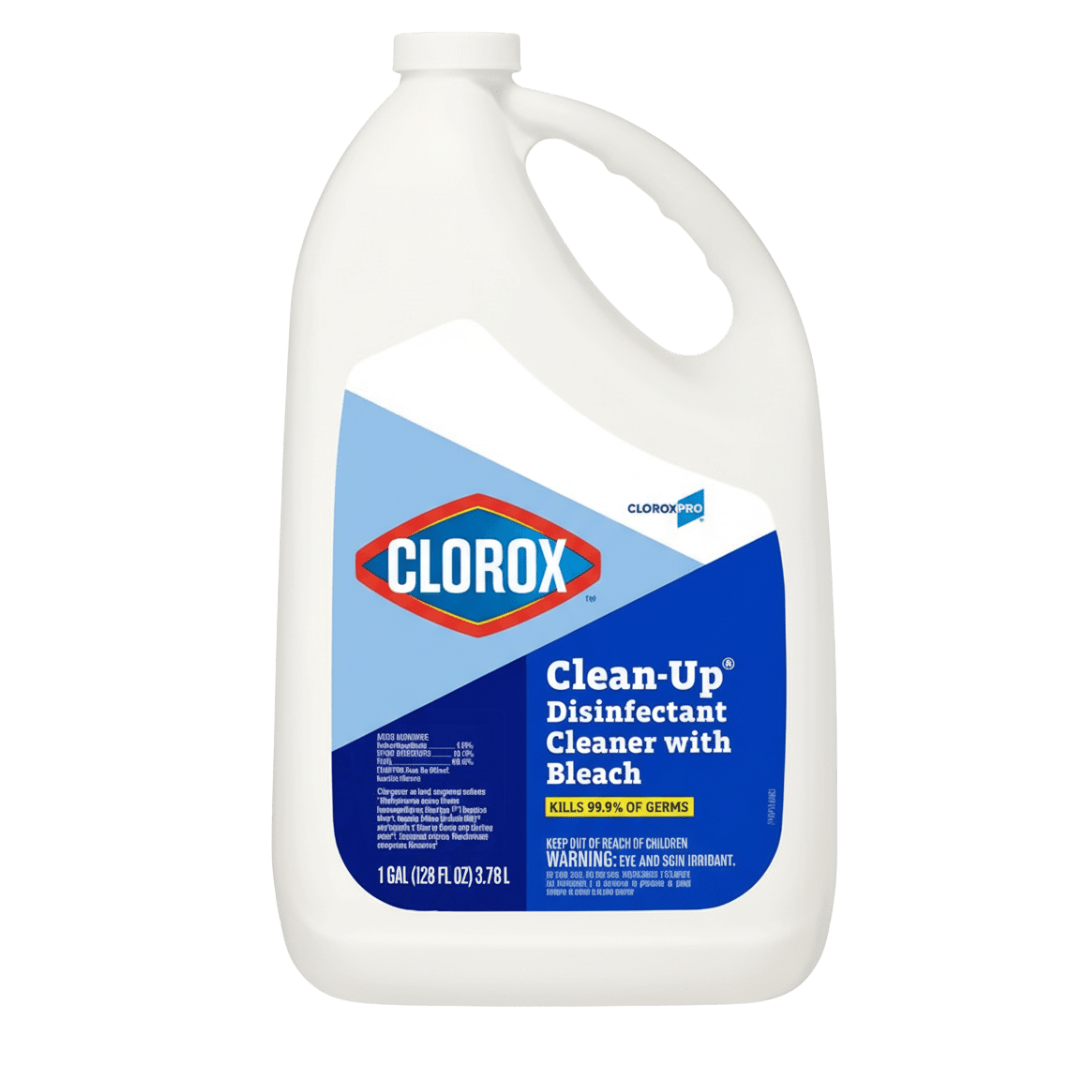
- Example: A product like Clorox Clean-Up Disinfectant Cleaner might have a 30-second dwell time for bacteria, but a 5-minute dwell time for viruses.
- Your Job: Read the label. Find the “kill time” for the germs you’re targeting (e.g., Influenza virus).
- The Process:
-
- CLEAN FIRST: (Yes, this again). A disinfectant can’t kill germs it can’t touch. Wipe away any visible dust, grime, or soil first.
-
- SPRAY & WAIT: Apply your bulk disinfectant liberally so the surface is visibly wet.
-
- LET IT DWELL: Look at your watch. If the dwell time is 5 minutes, let it sit for 5 minutes. If it starts to dry in 3 minutes, you must re-apply it to keep it wet for the full 5.
-
- WIPE (IF NEEDED): After the dwell time is up, you can wipe the surface dry or let it air-dry.
Disinfectant wipes are a popular shortcut. They combine the “cleaner” and the “disinfectant” in one. But dwell time still applies. You must wipe the surface and ensure it stays wet for the time listed on the canister.
Quick-Reference Chart: Sanitizer vs. Disinfectant
| Feature | Sanitizer | Disinfectant |
| Primary Job | Reduces bacteria | Kills bacteria, viruses, & fungi |
| Kill Claim | 99.9% of specified bacteria | 99.999% of all germs on label |
| Regulated By | EPA (food-safe) / FDA (hands) | EPA (as a “pesticide”) |
| Primary Zone | Kitchens / Food-Prep Surfaces | Restrooms / High-Touch Points |
| Key Product | Food-Safe Sanitizer, Hand Sanitizer | Bulk Disinfectant, Disinfectant Wipes |
| Critical Step | Clean First | Clean First + DWELL TIME |
The Right System for a Safe Facility
The answer to “Sanitizer or Disinfectant?” is both. They are two non-negotiable, non-interchangeable tools in your cleaning arsenal.
- You need Sanitizers: (both food-safe and bulk hand sanitizer) for your kitchens, breakrooms, and entryways.
- You need Disinfectants: (like Clorox Clean-Up Disinfectant Cleaner) for your restrooms, offices, and all high-touch common areas.
Using them correctly—cleaning first, and always respecting the dwell time—is the only way to ensure you’re not just “cleaning for show,” but “cleaning for health.”
Ready to build a truly safe and compliant facility? Shop our complete collection of bulk cleaning chemicals, from bulk hand sanitizer for your dispensers to EPA-registered bulk disinfectant to protect your most vulnerable spaces.