
5 Reasons Your Floor Finish Is Yellowing (And How to Fix It)
5 Reasons Your Floor Finish Is Yellowing (And How to Fix It)
There’s nothing more frustrating than a “clean” floor that still looks dirty.
You’ve invested thousands of dollars in your flooring and countless hours in labor. You chose a high-quality floor finish. You or your team applied it. It looked brilliant—a glossy, “wet look” shine that reflected the lights.
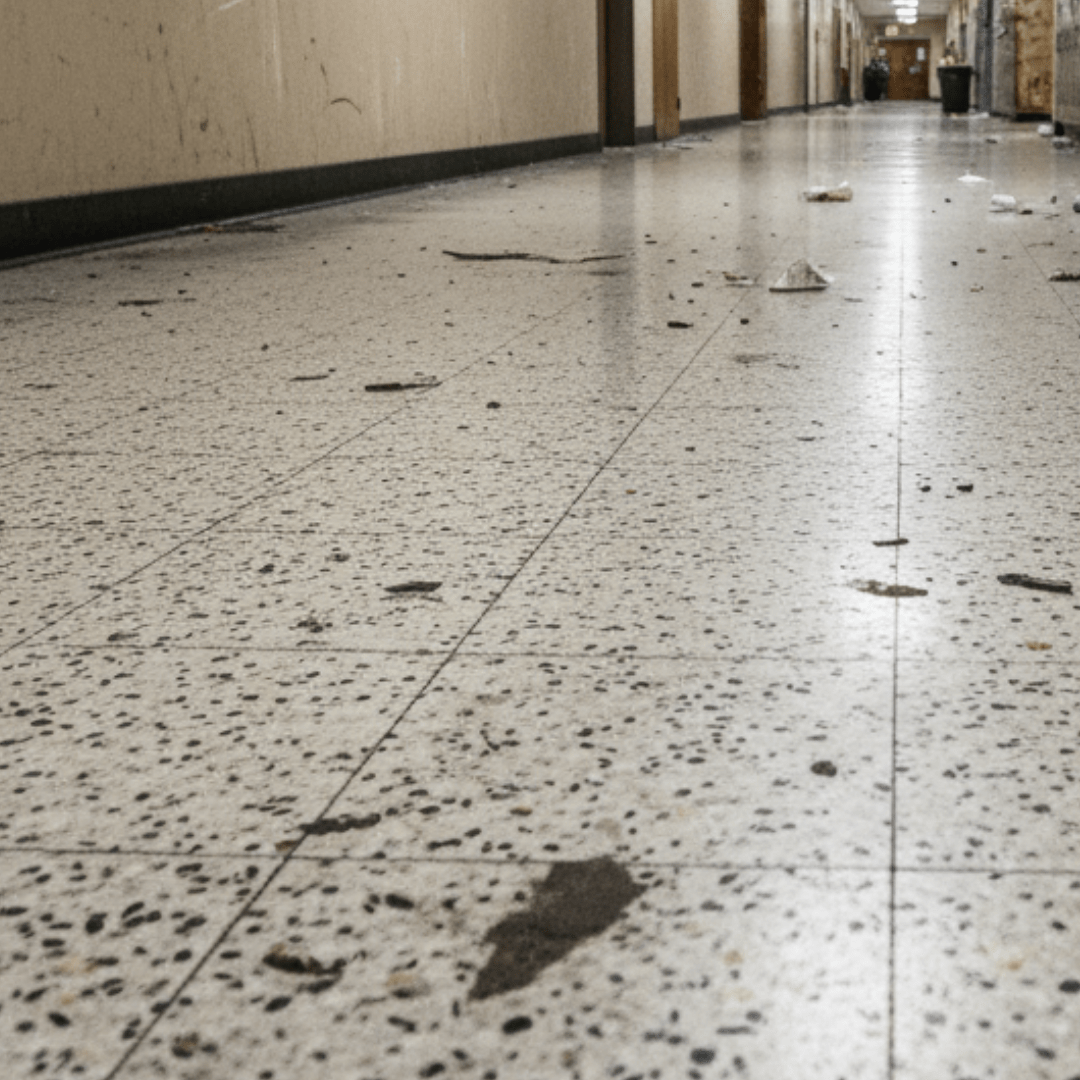
But now, months or years later, it’s not so brilliant. It’s developed a dull, dingy, and unmistakably yellow cast. It makes the entire facility look old, dated, and unkempt, no matter how much you mop.
This is one of the most common complaints in the floor care world, and the solution isn’t to just mop harder. A yellow floor is not a “stain”—it’s a symptom. It’s a sign that a critical part of your maintenance program is broken.
The good news is that it’s almost always fixable. The key is to correctly diagnose the cause before you apply a cure. If you just apply another coat of finish, you’re not just wasting money; you’re sealing in the problem.
As floor care experts, we’re going to walk you through the 5 most common reasons your floor finish is yellowing and provide the exact, professional-grade solution to fix it for good.
Reason 1: You’re Using the Wrong Daily Cleaner
This is, without a doubt, the most common culprit. You have a beautiful, durable acrylic floor finish, but your team is mopping it every day with the wrong chemical.
The “Why”:
Cleaners with a high pH (alkaline) or high-solvents are the enemy of your finish. This includes “all-purpose” cleaners, heavy-duty degreasers, or ammonia-based glass cleaners. Your floor finish is designed to be tough, but it’s not invincible. These harsh chemicals are designed to dissolve grease and grime; in the process, they also chemically “burn” and eat away at the polymers in your finish. This chemical reaction causes the finish to lose its clarity, become brittle, and turn yellow.
Even “mop and shine” products can be a problem, as they often just trap dirt in a gummy acrylic layer (more on that later).
The Diagnosis:
- Is your floor hazy, cloudy, or even sticky after mopping?
- Is the yellowing uniform across the entire floor, even in high-traffic areas?
- Are you using a cleaner that smells “like a hospital” (high in ammonia or butyl) or one that’s labeled as a “degreaser” for daily cleaning?
The Fix:
Stop immediately. The only chemical you should use for daily mopping on a finished floor is a pH-neutral floor cleaner. A neutral cleaner (which has a pH of around 7) is powerful enough to lift daily soils and dirt but is chemically inert, meaning it cleans the floor without attacking the protective finish.
The Prevention:
Switch your primary cleaning chemicals. Demote your “all-purpose” cleaner to spot-cleaning walls and save the degreaser for the kitchen. For your finished floors, invest in a quality neutral cleaner. This single change will dramatically extend the life and clarity of your floor finish.
Reason 2: Old, Built-Up Finish (Oxidation)
Your floor finish is not permanent. Even the highest-quality products have a lifespan. If you’ve just been applying coat after coat, year after year, your problem isn’t one bad layer—it’s dozens of old ones.
The “Why”:
The acrylic polymers in floor finish are just like any other plastic: they oxidize. Over time, exposure to air and UV light (especially from windows) causes a chemical change that naturally turns the polymers from clear to yellow. It’s the same reason old newspapers or old plastic containers turn yellow.
This is made worse by a “recoating” program. If your team just “screens and recoats” every year without ever fully stripping, you are trapping old, oxidized layers under new, clear ones. You’re also trapping a year’s worth of fine, ground-in dirt between the layers. The result is a “deep” yellow or brown, dingy look that no amount of surface cleaning can fix.
The Diagnosis:
- Is the yellowing worst in low-traffic areas, like corners, under mats, or along baseboards? This is where finish gets “piled up” and never wears away.
- Does your floor look “deep” and “cloudy” rather than just surface-level dirty?
- Do you know for a fact that the floor hasn’t been fully stripped down to the bare tile in over 2-3 years?
The Fix:
There is no “cleaner” that can fix this. The only solution is a total reset. You must perform a full chemical “strip and wax.” This involves using a heavy-duty floor stripper and an aggressive black floor pad to chemically dissolve and scrub away all of the old, yellowed layers of finish.
The Prevention:
A proper floor care program involves periodic stripping. For most commercial facilities, this should happen every 18-36 months, depending on traffic. You must buy a quality bulk floor stripper to remove the old, and then apply a high-quality, non-yellowing bulk floor finish like Betco Hard As Nails to start fresh.
Reason 3: Improper Application (No Neutralizer)
This is the most tragic cause of yellowing—it happens immediately after you’ve done all the hard work of applying a new finish.
The “Why”:
This is a simple but brutal chemistry lesson.
- Floor stripper is a powerful, high-alkaline chemical (pH of 11-14).
- Floor finish is an acidic polymer (pH of 8-9) that cures best in a neutral-to-slightly-acidic environment.
When you strip a floor, you must neutralize it before applying finish. If you fail to rinse away all the alkaline stripper residue, the new, acidic finish hits that residue and has a violent chemical reaction. This reaction instantly yellows the finish, prevents it from “locking in” (adhering) to the floor, and makes it cure into a soft, hazy, or powdery mess.
The Diagnosis:
- Did the floor turn yellow or hazy immediately (within 24-48 hours) of being finished?
- Does the new finish look streaky, cloudy, or “powdery”?
- Can you easily scuff it or peel it up with your fingernail?
The Fix:
This one hurts. You have to do the entire job over again. You must strip all of that new, failed finish off the floor. This time, however, you must follow the correct final step.
The Prevention:
NEVER SKIP THE RINSE. After you have stripped the floor and vacuumed up the slurry, you must do two things:
- Rinse the entire floor with a dedicated neutral cleaner or a specific post-strip neutralizing conditioner.
- Rinse the floor a second time with nothing but clean, cool water.
Only when the floor is completely clean and pH-neutral can you begin applying your new floor finish.
Reason 4: Using “Mop and Shine” or “One-Step” Products
This is a common trap for small businesses or homeowners trying to save time. Products that promise to “clean and shine” in one step seem efficient, but they often cause long-term disaster.
The “Why”:
These products are a poor-quality compromise. They are a weak cleaner mixed with a soft, low-grade acrylic polymer. Every time you mop, you’re not just cleaning; you’re also applying a micro-thin layer of this soft finish.
This soft finish never cures into a hard, protective shell. Instead, it remains “tacky” or “gummy.” This tackiness acts like a magnet for dirt, dust, and grime, which get “glued” to the floor. The next time you mop, you’re just sealing in that layer of dirt with a new layer of soft acrylic. Repeat this for six months, and your floor is a layered cake of dirt and yellowed, gummy polymers.
The Diagnosis:
- Does your floor get dirty faster than it used to?
- Does the floor feel perpetually sticky or tacky, even after mopping?
- Are you using a “one-step” or “mop and shine” product for your regular maintenance?
The Fix:
You’ve built up a soft, dirty mess that a neutral cleaner can’t fix. You guessed it: you need to perform a full strip with a bulk floor stripper and a black floor pad to cut through all that gummy build-up.
The Prevention:
Throw away the one-step products. A professional floor care program always has two distinct steps:
- Cleaning: Use a neutral cleaner to remove soil.
- Protecting: Use a high-quality, durable floor finish (like Betco Hard As Nails) to provide a hard, clear, protective shell.
Reason 5: Chemical Stains & Contaminants
Sometimes, the yellowing isn’t coming from your finish or your cleaners, but from what’s being tracked onto the floor.
The “Why”:
Your floor finish is tough, but it’s porous. Potent chemicals can be tracked in from the outside and “bleed” into the finish, causing a permanent stain.
- Asphalt Sealant: The #1 culprit. A freshly sealed parking lot will track in oily, black/yellow residue that chemically burns the finish.
- Ice Melt: Some types of ice melt (especially magnesium chloride) can be corrosive and leave a hazy, yellow residue if not cleaned up promptly.
- Cardboard “Tannin Bleed”: If you leave a damp or wet cardboard box sitting on a finished floor, the tannins (dyes) from the cardboard will “bleed” out and leave a perfect brown/yellow square stained into the finish.
- Restroom Cleaners: Acidic bowl cleaners that are splashed or dripped onto the finished floor will “etch” and yellow the finish.
The Diagnosis:
- Is the yellowing localized? Is it in a “path” from the front door?
- Does the stain look like a footprint or a perfect square/circle where something was sitting?
- Is the yellowing concentrated around toilets or urinals?
The Fix: This is a tough one. A “deep scrub” with a blue or green pad might be aggressive enough to remove just the top, stained layers. But in most cases, especially with asphalt sealant, the stain is too deep. The only solution is to strip and refinish the affected area.
The Prevention:
Matting is your #1 defense. High-quality entrance mats (a “scraper” mat outside, a “wiper” mat inside) will trap 80-90% of these chemical contaminants before they ever hit your floor. Use “breathable” mats (not rubber-backed) in areas that get wet, and never store cardboard directly on the floor.
The Cure: Your 3-Step Plan to a Brilliant Floor
Okay, you’ve diagnosed the problem. For almost all of these causes (except #1, which is a simple fix), the “cure” is a full strip-and-wax. Don’t see this as a failure; see it as a “factory reset” for your floors.
Step 1: Get the Right Supplies
Don’t cheap out. The quality of your products will determine the quality and longevity of your results. You will need:
- A high-quality bulk floor stripper to cut through the old, yellowed layers.
- Aggressive black floor pads for your floor machine.
- A neutral cleaner for the critical rinse-and-neutralize step.
- A high-solids, durable, non-yellowing bulk floor finish. We recommend a workhorse like Betco Hard As Nails or Diversey Vectra ProX Floor Finish. Buying bulk floor finish in 5-gallon pails is far more economical and ensures you have enough.
Step 2: Do the Job Right
Follow the procedure perfectly. Strip the floor, vacuum the slurry, rinse with neutral cleaner, rinse with plain water, and then let it dry completely.
Step 3: Apply Your New Finish
Apply 4-6 thin, even coats of your new floor finish. Let each coat dry completely (30-45 minutes) before applying the next. These thin, cured layers will create a hard, clear, and durable bond that lasts.
A yellow floor is a problem, but it’s a solvable one. Stop being frustrated and start your “factory reset.”
Ready to get your shine back? Explore our complete floor care category and stock up on the professional-grade bulk floor stripper and bulk floor finish you need to do the job right.