
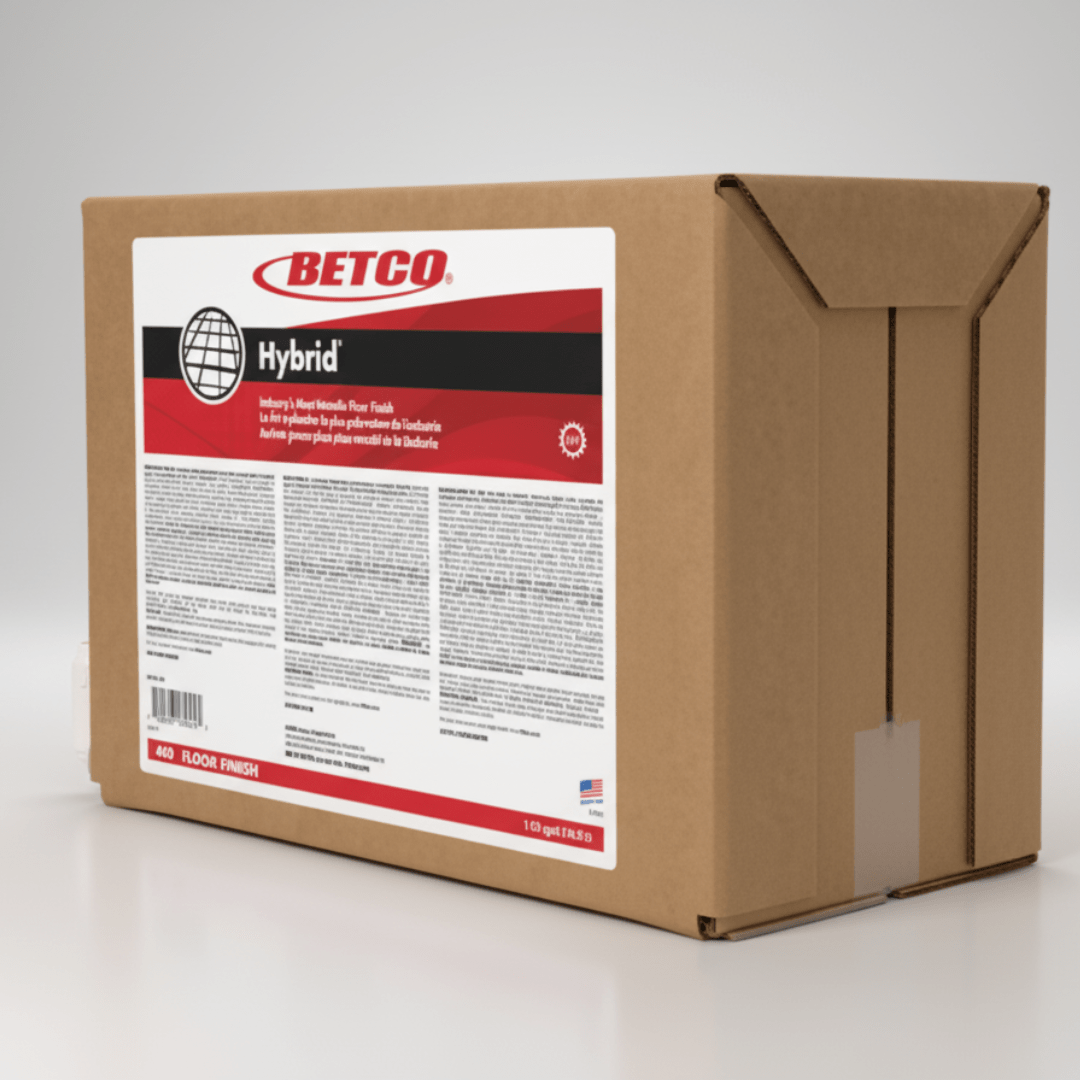
Floor Finish Solids Explained: 17% vs. 20% vs. 25% – What’s Right for Your Facility?
Floor Finish Solids Explained: 17% vs. 20% vs. 25% – What’s Right for Your Facility?
If you’ve ever shopped for floor finish, you’ve faced the wall of options. The labels are a confusing mix of terms: “high durability,” “diamond shine,” “wet look,” “fast-drying.” But one technical specification trumps all the others in importance, and it’s the one most people misunderstand: Solids Content.
You’ll see it listed as a percentage: 17%, 20%, 25%, and so on.
To the average buyer, this number is just jargon. To a floor care professional, it’s the single most important factor in determining a finish’s durability, shine, cost, and—critically—its labor requirements.
Choosing the wrong solids content is an expensive mistake. You could be wasting money on a product you don’t need, or you could be setting your team up for a frustrating, failed application.
In this expert guide, we’re demystifying “solids.” We’ll explain what this percentage means and break down the pros and cons of each level, so you can confidently choose the perfect bulk floor finish for your facility, your staff, and your budget.
What Are “Solids” in a Floor Finish?
This is the most important concept to grasp.
A jug of floor finish is, for the most part, liquid. It’s a formula of acrylic polymers, plasticizers, and other chemicals suspended in a liquid carrier (mostly water and solvents).
When you apply a thin coat of finish, that liquid carrier evaporates into the air. The “solids” are the stuff left behind. This is the hard, clear, protective shell that becomes your new floor.
Therefore, “solids content” is simply the percentage of that formula that stays on the floor after it dries.
- A 17% solids finish (like Betco Hard As Nails 17% soilds) means that for every 1-gallon jug, 83% will evaporate, and 17% will become the protective layer.
- A 25% solids finish means 75% evaporates, and 25% becomes the protective layer.
Solids = Protection.
A higher solids content means you are applying a thicker, more durable layer of protection with every single coat.
The “More Is Always Better” Myth
The natural assumption is, “Great! I’ll just buy the 25% solids finish. It’s the best.”
This is the most common and costly mistake.
The best finish is not the one with the highest solids; it’s the one that matches your maintenance program and your team’s skill level.
There is a critical trade-off:
Higher Solids = Harder to Apply
A 25% solids finish is noticeably “thicker” or more “syrupy” than a 17% finish. This has serious real-world consequences:
- It “Mops Heavier”: It’s physically harder to push a mop loaded with a high-solids finish.
- It Dries Faster: The higher concentration of polymers means it can “set up” too quickly, especially in low-humidity environments.
- It’s Prone to “Mop Drag” & Streaking: If your applicator isn’t moving quickly and skillfully, the mop will start to drag as the finish sets, leaving streaks, bubbles, and lap lines that are impossible to fix without stripping.
- It Can Be Less Clear: Some ultra-high-solids finishes can have a slight amber or yellow cast compared to the crystal-clear look of a lower-solids finish.
A high-solids finish in the hands of an inexperienced crew is a recipe for a hazy, streaky, yellowed floor that you’ll just have to strip and re-do.
The Breakdown: Choosing Your Solids Level
Let’s break down the categories so you can make an informed choice.
Category 1: 15% – 18% Solids (The “Workhorse”)
This is the industry-standard, the go-to for countless schools, offices, and retail stores.
- Example Product: Betco Hard As Nail 17% soilds 5 gal. pail
- Pros:
-
- Extremely Forgiving: This is the #1 benefit. It has a high “flow rate” and “self-levels” beautifully, meaning it smooths itself out to reduce streaks and mop lines.
-
- Beginner-Friendly: Perfect for in-house crews, new employees, or anyone who isn’t a full-time floor care professional.
-
- Crystal-Clear Shine: Tends to cure with the highest clarity and least amount of yellowing.
-
- Cost-Effective: Typically has a lower upfront cost per gallon.
- Cons:
-
- Requires More Coats: Because you’re putting down less “stuff” per pass, you need more coats to achieve the same level of protection. A standard application is 5-6 coats.
- Best For:
-
- Facilities with in-house or less-experienced cleaning crews (schools, offices, churches, retail stores).
-
- Anyone who values a “streak-free” application over application speed.
-
- Most standard “strip and wax” and “scrub and recoat” maintenance programs.
Category 2: 20% – 22% Solids (The “Pro’s Choice”)
This is the high-performance option. It’s designed for speed, efficiency, and durability, but it demands a skilled applicator.
- Example Product: Diversey Vectra ProX Floor Finish – 5 Gallon BIB
- Pros:
-
- Saves Labor: This is its entire purpose. You can achieve a deep, durable shine in just 3-4 coats instead of 5-6. This dramatically cuts your labor time (and labor is almost always your biggest expense).
-
- High Durability: Builds a thick, tough shell very quickly.
-
- Great Burnish Response: These finishes are often designed to respond beautifully to high-speed burnishing.
- Cons:
-
- Less Forgiving: You must move quickly and confidently. Mop drag and streaks are a real risk if you’re not experienced.
-
- Higher Upfront Cost: You’re paying for more polymer in that jug.
- Best For:
-
- Professional cleaning contractors (where time is money).
-
- Highly-skilled, in-house janitorial teams.
-
- High-traffic areas that need maximum protection built up fast (grocery store aisles, hospital lobbies).
Category 3: 25%+ Solids (The “Specialist”)
This is an ultra-high-solids (UHS) finish. It’s a specialty product for specific situations.
- Pros:
-
- Maximum Durability, Minimum Coats: You can get a tough, protective shell in as few as 2-3 coats.
-
- “Low-Maintenance” Finish: Often designed for facilities that cannot or will not be burnishing or buffing. It’s meant to be applied and left alone.
- Cons:
-
- Very Difficult to Apply: This is for experts only. It sets up extremely fast.
-
- Prone to Yellowing: The high concentration of polymers can lead to more noticeable discoloration over time.
-
- Extremely Difficult to Strip: That super-hard shell is a nightmare to remove, requiring more time, labor, and floor stripper.
- Best For:
-
- Budget-strapped facilities that need a “strip and wax” to last 2-3 years with very little maintenance.
-
- Low-traffic areas or storage rooms where you just need a thick, durable, “mop-and-go” surface.
The Final Verdict: It’s a “Labor vs. Materials” Choice
The right floor finish for you depends entirely on your answer to this question: What is your biggest expense, Labor or Materials?
Scenario 1: You have an in-house crew and a tight material budget.
- Your Answer: Go with a 17%-18% solids finish.
- Why: The upfront cost of your bulk floor finish (like the Betco Hard As Nails 5-gallon pail) will be lower. It’s forgiving and easy to apply, so you don’t have to worry about your staff making costly mistakes. You’ll spend a bit more on labor time applying 5-6 coats, but the material savings and streak-free results are worth it.
Scenario 2: You’re a pro contractor, or labor is your #1 cost.
- Your Answer: Go with a 20%-22% solids finish.
- Why: Your time is money. A higher material cost is a tiny price to pay to cut your on-site application time by 30-50%. Applying 3 coats instead of 6 means you can finish the job faster, bill it sooner, and move to the next client. It’s a labor-saving investment.
It’s Not Just a Number, It’s a Strategy
As you can see, “solids content” isn’t just a technical spec—it’s the key to your entire floor care strategy. Choosing the right one saves you money, time, and endless frustration.
Buying your bulk floor finish in 5-gallon containers is the first step to saving money. The second, more important step, is choosing the right finish for the job.
Ready to find the perfect finish for your facility? Explore our complete collection of floor care products, from economical 17% solids workhorses to high-performance 20%+ finishes. If you’re still not sure, contact our team of experts—we’ve been in your shoes, and we’re here to help.